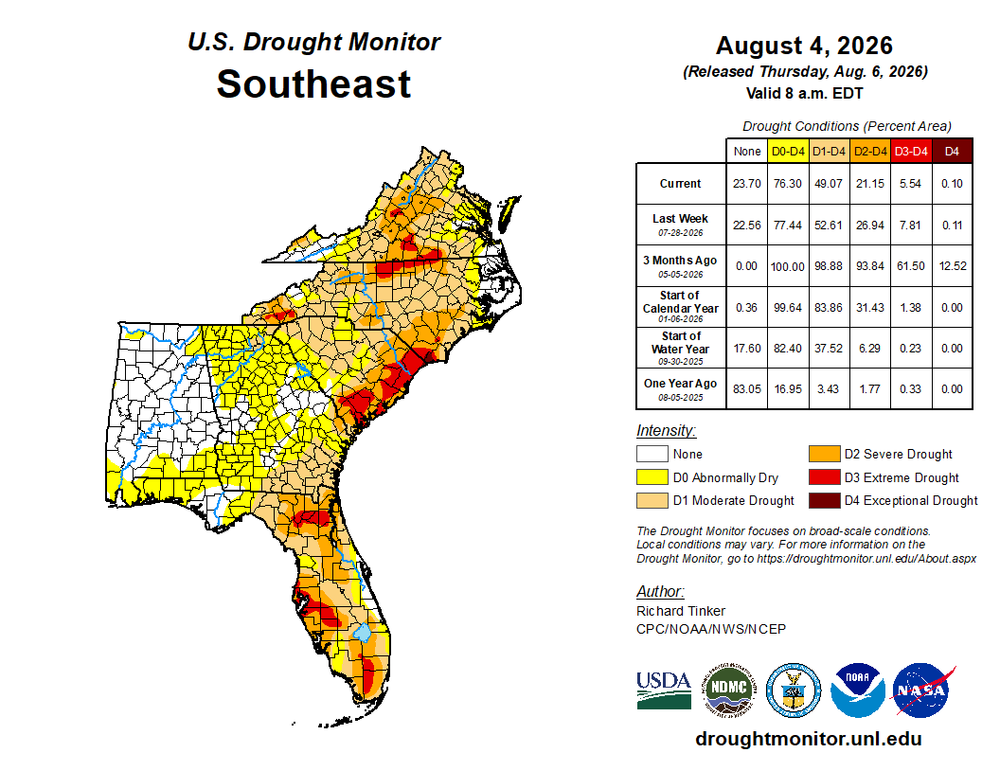
Torrential downpours have flooded roads across Tampa Bay in recent days, but they haven't ended the region's drought.
Why it matters: Heavy summer thunderstorms can overwhelm drainage systems and trigger flash flooding while doing little to replenish groundwater, lakes and aquifers that supply drinking water and support ecosystems.
Much of the Tampa Bay region remains under a Phase III drought, despite frequent rainfall.
Summer storms often produce intense bursts of rain that run off streets and storm drains instead of slowly soaking into the ground where it can recharge water supplies.
The resilience challenge: The contrast between flooded neighborhoods and ongoing drought highlights why communities must prepare for both extremes at the same time.
Local governments continue investing in:
- Stormwater systems to reduce flooding.
- Water conservation to protect drinking water supplies.
- Infrastructure that can better handle heavier rainfall and longer dry periods.
For residents, the weather is a reminder that flood preparedness and water conservation go hand in hand.
How to prepare:
- Never drive through flooded roadways. Turn Around, Don't Drown.
- Clear storm drains and gutters around your home.
- Use water wisely even during rainy periods, as drought conditions can persist.
- Monitor local weather forecasts for additional heavy rain and potential flood alerts.
Bottom line: Tampa Bay's recent storms underscore a growing reality for Florida: communities can experience dangerous flooding and drought at the same time. Building resilience means preparing for both too much water today and not enough water tomorrow.