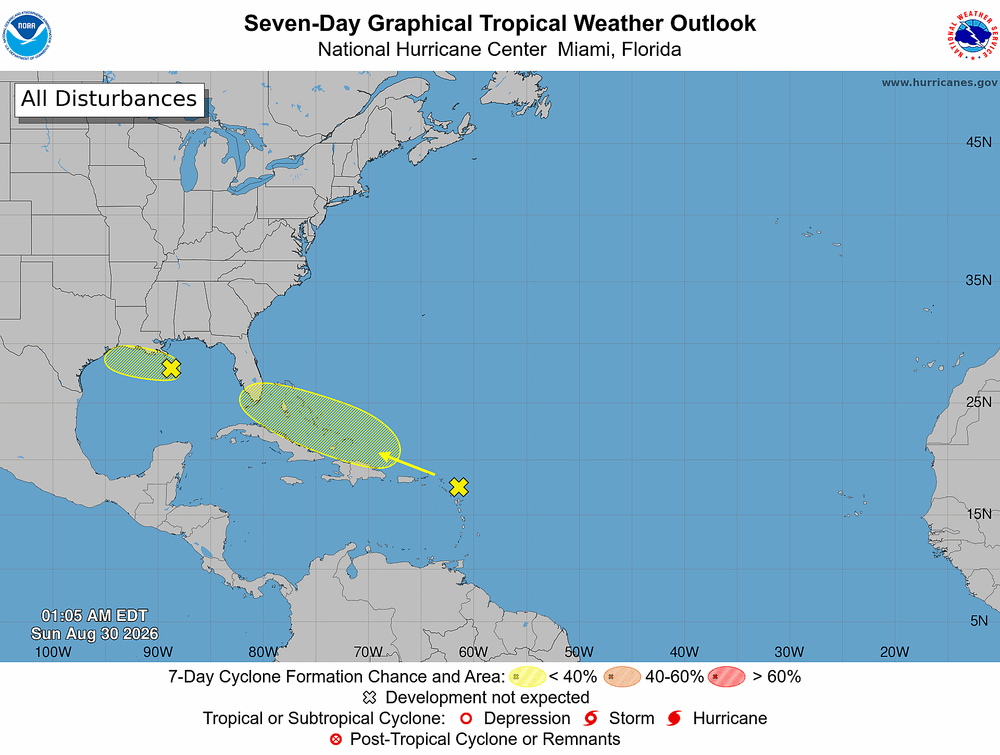
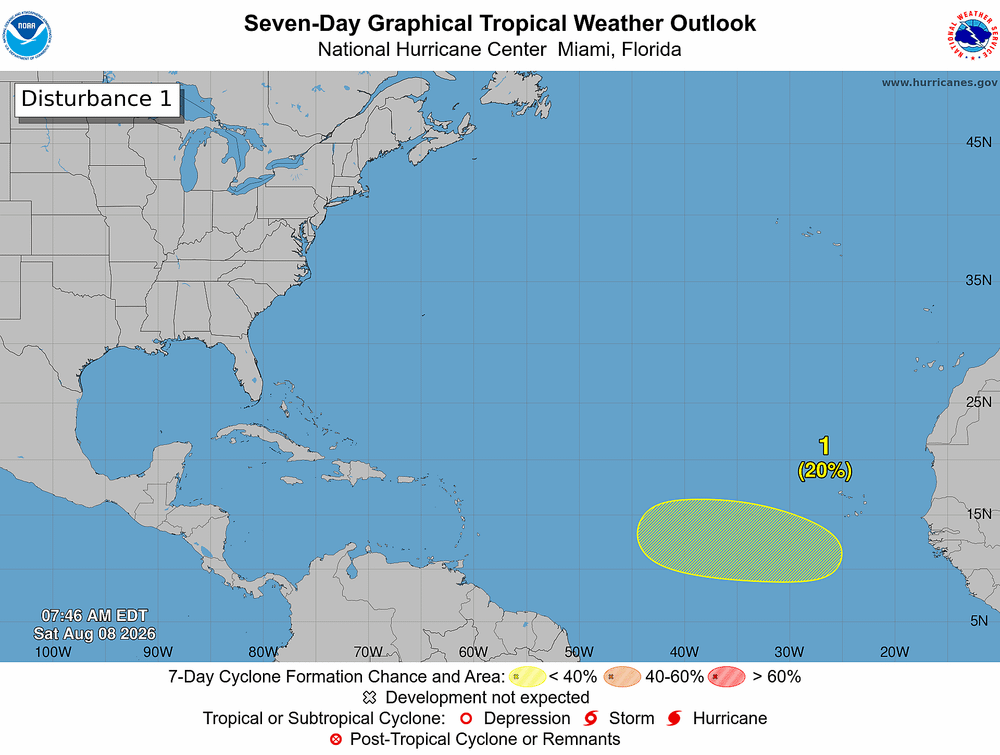
Even with fewer expected storms, unusually warm Gulf waters mean any storm that develops could still become dangerous.
The latest:
- Tropical Storm Bertha developed near Florida earlier this week, an example of how the storm risk still remains.
- Colorado State University now forecasts nine named storms, four hurricanes and one major hurricane, citing a strengthening El Niño.
- NOAA's seasonal outlook calls for eight to 14 named storms, three to six hurricanes and one to three major hurricanes.
The big picture:
- A strengthening El Niño is increasing wind shear across the Atlantic, making it more difficult for tropical systems to organize and intensify.
- At the same time, warm Atlantic and Gulf waters continue to provide fuel for storms that are able to develop.
- Forecasters emphasize that seasonal outlooks predict overall activity, not where storms will make landfall.
What else is limiting development:
- Large plumes of Saharan dust are moving across the Atlantic, bringing drier air that suppresses tropical development.
- Strong upper-level wind shear and generally near-average sea surface temperatures across much of the tropical Atlantic are also helping keep conditions quiet.
Be prepared:
- Know your evacuation zone before a storm threatens.
- Review your homeowners and flood insurance coverage.
- Assemble a hurricane emergency kit with several days of food, water, medications and important documents.
- Monitor forecasts throughout hurricane season, which runs through Nov. 30.
Bottom line: A quieter hurricane season does not mean a safe hurricane season. Emergency managers and meteorologists stress that one well-placed storm can have catastrophic impacts, making preparation just as important in a below-average year as it is during an active one.