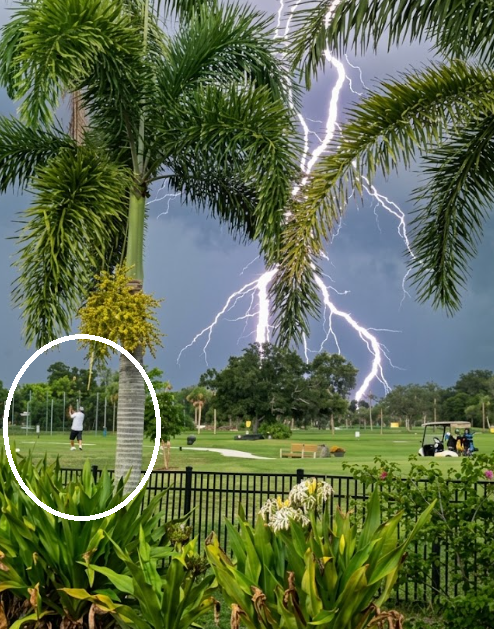
Florida’s afternoon thunderstorms can arrive quickly, and recent storms are providing a powerful reminder that the danger extends well beyond heavy rain and flooded roads.
Around 11,000 lightning bolts were recorded across Central Florida on Friday, according to weather reports. Along the Gulf Coast, frequent lightning was also observed during storms in Southwest Florida, while a dramatic bolt was photographed near Madeira Beach.
For Tampa Bay residents, the takeaway is simple: When thunder starts, outdoor activities should stop.
Around 11,000 lightning bolts Friday around central Florida. A reminder too that August is the most common month of the year for lightning in the Orlando area, followed by July then June. pic.twitter.com/A7PAq0pKWe
— Noah Bergren (@NbergWX) August 8, 2026
August brings significant lightning risk
August is among Florida’s most active months for thunderstorms and lightning. Hot, humid conditions combined with daily sea-breeze boundaries routinely help storms develop during the afternoon and evening.
The storms do not need to be severe to be dangerous. Lightning can strike outside the area of heaviest rainfall, meaning someone can still be at risk even when a storm appears to be several miles away.
Beaches are particularly dangerous because people are exposed with few substantial structures nearby. The same applies to boats, golf courses, athletic fields, parks and swimming pools.
Matt. Bad electrical storm in Burnt Store Village. At 6:45 PM pic.twitter.com/v2yyOwJF5v
— Roger MSadoques (@rogms11pg) August 7, 2026
Hear thunder? Go inside
A useful rule for disaster preparedness is straightforward: If you can hear thunder, you are close enough to a storm to be struck by lightning.
Do not wait for rain to begin or for lightning to appear directly overhead. Move into a substantial enclosed building or a hard-topped vehicle and remain there until at least 30 minutes after the last thunder.
If you're at the beach, get off the sand and out of the water. Beach shelters, umbrellas, trees and open-sided structures do not provide adequate lightning protection.
One place you definitely DO NOT want to be during a thunderstorm is on an open beach!! Julia Schaefer captured this bolt from a balcony at Madeira Beach. #Florida #lightning pic.twitter.com/KFbNRDmbNR
— Paul Dellegatto⚡️FOX (@PaulFox13) August 6, 2026
Make lightning part of your Tampa Bay preparedness plan
Unlike hurricanes, thunderstorms often provide little time to prepare. Residents can reduce their risk by building lightning awareness into everyday summer plans:
- Check the radar before heading outside. Pay attention to storms expected during the afternoon and evening.
- Identify shelter before you need it. Know where you'll go if thunder develops at the beach, park or sporting event.
- Never shelter beneath a tree. Trees can be struck and conduct dangerous electrical currents.
- Stay away from water. Get out of pools, the Gulf, bays and other bodies of water when storms approach.
- Don't resume activities too soon. Wait 30 minutes after the final sound of thunder before returning outside.
The bottom line for Tampa Bay
Lightning is sometimes overshadowed by hurricanes, tornadoes and flash flooding in disaster preparedness discussions, but Florida's routine summer storms can pose an immediate threat.
A sunny morning or even a relatively clear beach does not guarantee conditions will remain safe through the afternoon.
The safest response doesn't require figuring out how close the lightning is: If thunder is audible, head indoors.