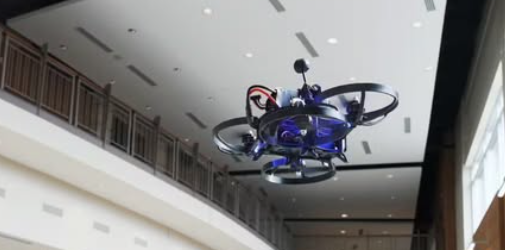
Florida is investing more than $1.1 million over two years in a pilot program testing nonlethal security drones designed to respond to active shooter incidents at public schools.
Why it matters: Supporters say the technology could shorten response times during school emergencies. Critics say the system has not yet been tested during a real active shooter event.
The latest:
- Florida lawmakers approved $564,500 in the 2026-27 state budget for the Campus Guardian Angel program.
- The funding follows $557,000 approved last year, bringing the state's total investment to more than $1.1 million.
- The Florida Department of Education has not announced whether the new funding will expand the program to additional school districts.
Schools participating in the pilot:
- Deltona High School in Volusia County.
- Boyd H. Anderson High School in Broward County.
- Amos P. Godby High School in Leon County.
How the system works:
- Schools are equipped with 30 to 60 drones, depending on campus size.
- The drones are stored in ceiling-mounted stations and would deploy during an emergency.
- Each drone carries live cameras, flashing lights, a speaker and a nonlethal pepper spray device.
- Operators can pilot the drones remotely, potentially from hundreds of miles away.
Response goals:
According to Campus Guardian Angel, the system is designed to:
- Launch within five seconds.
- Reach a suspected shooter in 15 seconds.
- Distract or incapacitate the suspect within 60 seconds.
The debate:
Supporters argue faster situational awareness could help first responders and save lives during rapidly unfolding attacks. The company says it is working with the University of Florida on an independent study comparing drone response times with traditional law enforcement.
Critics note the technology has only been demonstrated in simulations and has not been used during an actual active shooter incident, leaving questions about its real-world effectiveness.
Bottom line: Florida is among the first states to test security drones as part of school safety. Whether the technology becomes more widely adopted will likely depend on the results of the pilot program and future evaluations of its performance during emergencies.